
Asphalt Sealcoating Tulsa
Asphalt sealcoating in Tulsa is the single most cost-effective way to protect driveways and parking lots from Oklahoma’s punishing climate. A professionally applied sealcoat creates a barrier against UV radiation, water infiltration, freeze-thaw cycles, and chemical spills, extending your pavement’s functional lifespan by up to 30 years when combined with routine maintenance. According to industry research, regular sealcoating every 2 to 3 years can reduce long-term asphalt repair costs by up to 50% (National Asphalt Pavement Association).
Pavement Pro delivers professional parking lot sealcoating and driveway sealcoating throughout the Tulsa metro area. As a trusted Oklahoma asphalt contractor, we combine premium coal-tar and asphalt-emulsion sealers with proper surface preparation to deliver results that hold up against Tulsa’s 60+ degree daily temperature swings, 36 inches of annual rainfall, and relentless summer UV exposure.
Why Asphalt Sealcoating Matters for Tulsa Properties
Unsealed asphalt begins deteriorating the moment it is installed. Tulsa sits in USDA Plant Hardiness Zone 7a, where summer temperatures regularly exceed 100 degrees Fahrenheit and winter lows dip below 20 degrees. This extreme range creates a destructive expansion-contraction cycle inside your pavement.
Without a protective sealcoat, the asphalt binder oxidizes within 12 to 18 months. Oxidation makes the surface brittle, which allows water to penetrate small cracks. When that trapped moisture freezes overnight during Oklahoma’s volatile winter weather, it expands by roughly 9%, widening cracks into potholes. The Federal Highway Administration (FHWA) identifies this freeze-thaw mechanism as the leading cause of asphalt pavement failure in the Southern Plains region.
Sealcoating stops this cycle at the source. A properly applied sealcoat replenishes the surface binder, seals hairline cracks, and creates a waterproof membrane that repels moisture, motor oil, gasoline, and deicing chemicals. For Tulsa property owners, this means fewer asphalt repairs, lower long-term maintenance costs, and a consistently professional appearance.
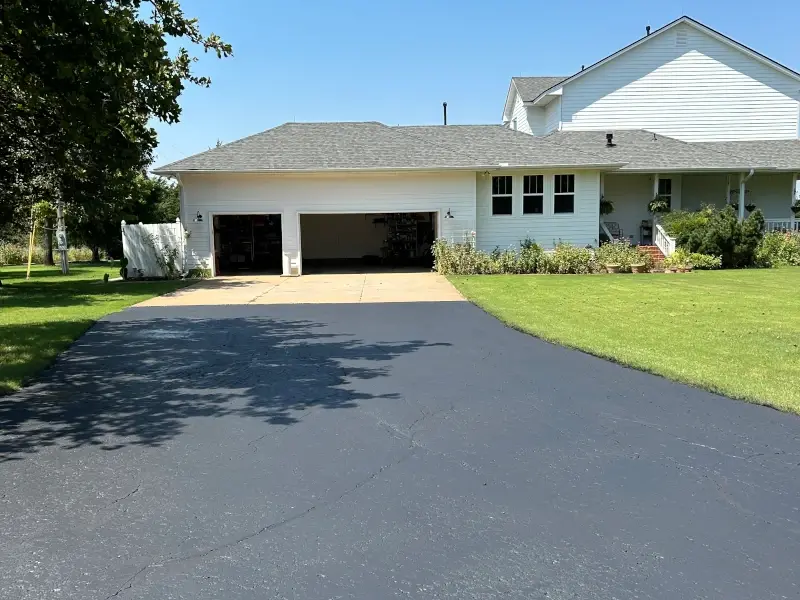
Driveway Sealcoating in Tulsa
Your driveway is one of the first things visitors notice about your home. A freshly sealcoated driveway restores the rich, deep-black finish that signals careful property maintenance. Beyond curb appeal, driveway sealcoating provides measurable structural protection.
How Driveway Sealcoating Extends Pavement Life
A well-maintained asphalt driveway can last 20 to 30 years. Without sealcoating, that lifespan drops to 10 to 15 years, according to the Asphalt Institute. The difference comes down to oxidation prevention and moisture exclusion.
Tulsa’s intense UV exposure accelerates oxidation faster than in northern climates. The asphalt binder loses flexibility, the surface turns gray, and fine cracks appear within the first two years. Sealcoating every 2 to 3 years reverses this process by adding a flexible, UV-resistant layer that keeps the binder intact and prevents water from reaching the aggregate base.
What to Expect from Residential Sealcoating
PavementPro’s residential sealcoating process follows a strict protocol. We begin by power washing the entire surface to remove dirt, debris, and loose material. Oil spots receive a primer treatment to ensure adhesion. Any existing cracks wider than a quarter inch are filled with hot-pour crack sealant before the sealcoat is applied. We then apply two coats of premium-grade sealer using commercial spray equipment, ensuring uniform coverage at the manufacturer-recommended mil thickness.
Most residential driveways dry to the touch within 4 to 8 hours under normal conditions. We recommend keeping vehicles off the surface for a full 24 to 48 hours to allow complete curing.
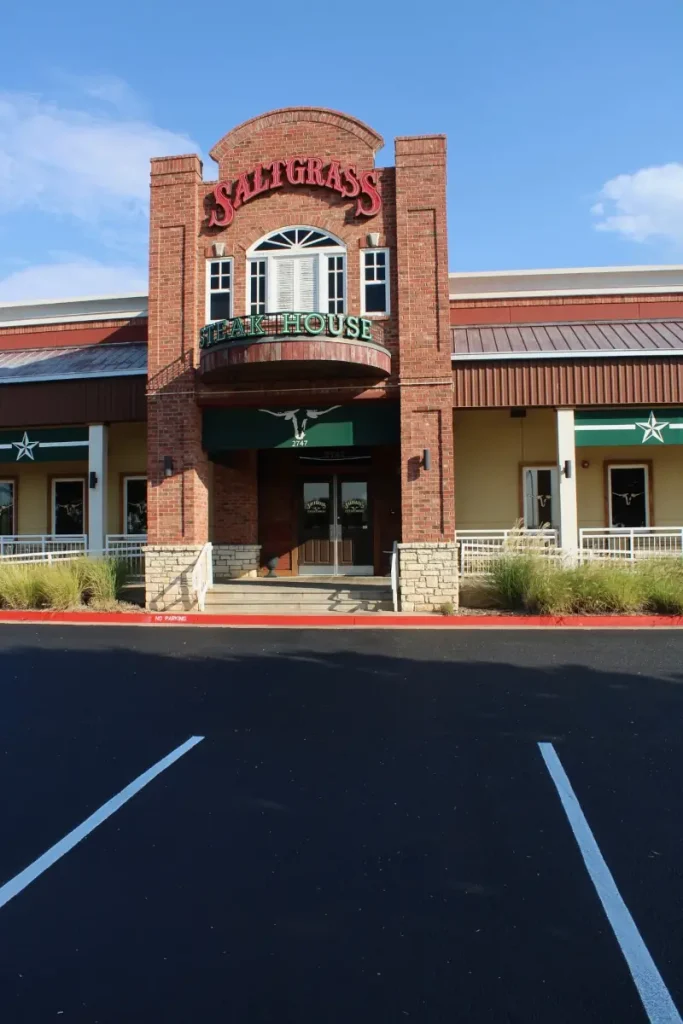
Parking Lot Sealcoating in Tulsa
Commercial parking lot sealcoating is a strategic investment that protects one of your most expensive assets. A single commercial parking lot can cost $3 to $7 per square foot to install. Sealcoating that surface every 2 to 3 years costs a fraction of that amount and can double the return on your original paving investment.
Protecting Your Business Investment
Commercial parking lots endure constant vehicle traffic, heavy loads from delivery trucks, and chemical exposure from oil, transmission fluid, and gasoline. These petroleum-based chemicals dissolve unsealed asphalt binder on contact. Sealcoating creates an impermeable barrier that prevents chemical penetration and preserves the structural integrity of your lot.
Most commercial properties in Tulsa find that regular sealcoating reduces their overall pavement maintenance budget by 10 to 15% compared to reactive repair strategies. Smart property managers view sealcoating as a capital preservation measure, not a discretionary expense.
Flexible Scheduling for Commercial Properties
PavementPro understands that closing a parking lot disrupts business. We offer evening, weekend, and phased application schedules that keep portions of your lot accessible during the sealcoating process. Most commercial projects are completed within 1 to 2 days, with full curing achieved within 24 to 48 hours. We also coordinate sealcoating with parking lot striping and crack sealing to bundle services into a single, efficiently managed project.
Driveway vs. Parking Lot Sealcoating: Key Differences
| Factor | Driveway Sealcoating | Parking Lot Sealcoating |
| Typical Area | 400 to 800 sq ft | 5,000 to 100,000+ sq ft |
| Application Method | Spray or squeegee, 2 coats | Commercial spray rig, 2 coats |
| Cure Time | 24 to 48 hours | 24 to 48 hours (phased) |
| Frequency | Every 2 to 3 years | Every 2 to 3 years |
| Traffic Considerations | Light residential vehicles | Heavy trucks, high volume |
| Additional Services | Crack filling, oil spot priming | Crack sealing, striping, ADA marking |
How Tulsa’s Climate Affects Your Asphalt
Tulsa’s position in Tornado Alley means asphalt surfaces face a unique combination of environmental stressors that accelerate deterioration faster than national averages.
UV Radiation and Oxidation
Tulsa receives approximately 235 sunny days per year, placing it in the top third nationally for UV exposure. Ultraviolet radiation breaks down the carbon bonds in asphalt binder, causing the surface to become brittle and gray. This oxidation process begins within months of installation on unprotected pavement. Sealcoating blocks UV penetration and preserves the binder’s flexibility.
Freeze-Thaw Cycles
The Oklahoma Mesonet weather network records an average of 80 freeze-thaw cycles per year in the Tulsa metro area. Each cycle forces trapped water to expand and contract inside pavement cracks, progressively widening them. A single winter can transform a hairline crack into a structural failure if the surface is left unsealed.
Severe Storm Damage
Tulsa averages 36 inches of rain annually, with intense spring storms capable of dropping 2 to 4 inches in a single event. Standing water accelerates base erosion beneath unprotected asphalt. Sealcoating prevents water penetration and maintains the aggregate base’s load-bearing capacity.
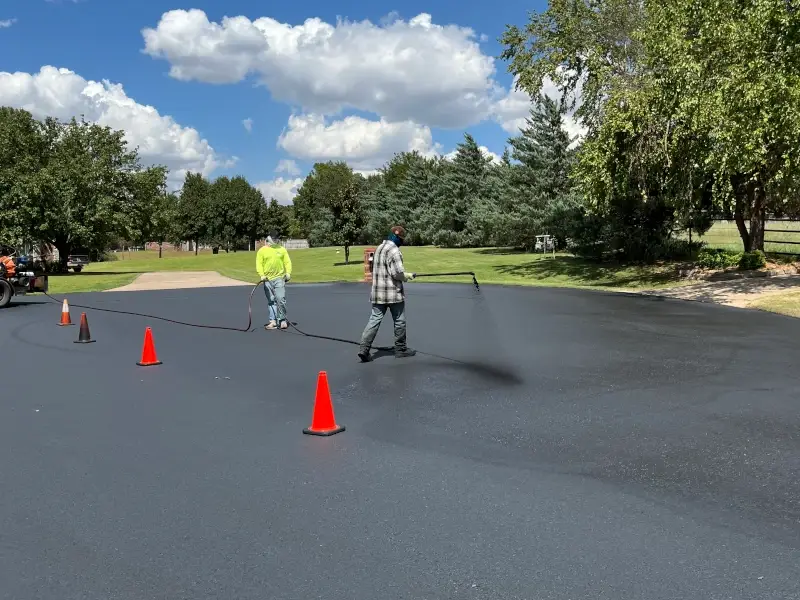
PavementPro’s Sealcoating Process
Professional sealcoating is only as good as the preparation behind it. PavementPro follows a systematic protocol on every project to ensure maximum adhesion, uniform coverage, and long-term performance.
Step 1: Surface Inspection and Assessment
Our team inspects the entire surface to identify cracks, potholes, oil stains, and drainage issues. We document the condition and recommend any necessary asphalt repairs before sealcoating begins.
Step 2: Cleaning and Preparation
We power wash the surface to remove all dirt, vegetation, and loose debris. Oil spots and chemical stains receive a primer treatment to prevent adhesion failure. Cracks wider than a quarter inch are filled with hot-pour rubberized crack sealant that flexes with temperature changes.
Step 3: Sealcoat Application
We apply two coats of commercial-grade coal-tar emulsion or asphalt-emulsion sealer, depending on the application requirements. Each coat is applied at the manufacturer-specified coverage rate using calibrated spray equipment. The second coat is applied perpendicular to the first for complete, gap-free coverage.
Step 4: Curing and Final Inspection
After application, we barricade the area and allow 24 to 48 hours for full curing. Our team conducts a final walk-through to verify uniform coverage, proper edge lines, and complete adhesion.
When to Sealcoat in Tulsa
Timing matters. Sealcoating requires ambient temperatures above 50 degrees Fahrenheit and no rain in the forecast for at least 24 hours. In Tulsa, the optimal sealcoating window runs from April through October, with May and September offering the best combination of warm temperatures and lower humidity.
New asphalt should cure for at least 6 months before receiving its first sealcoat application. This allows volatile oils in the fresh asphalt to evaporate and the surface to fully harden. Applying sealant too soon can trap oils beneath the coating, leading to adhesion failure and premature peeling.
Benefits of Professional Sealcoating at a Glance
| Benefit | Details |
| UV Protection | Blocks ultraviolet radiation that oxidizes asphalt binder, preventing brittleness and graying |
| Water Resistance | Creates an impermeable membrane that prevents water infiltration and freeze-thaw damage |
| Chemical Barrier | Resists petroleum-based fluids including motor oil, gasoline, and transmission fluid |
| Extended Lifespan | Properly maintained asphalt lasts 20 to 30 years vs. 10 to 15 years without sealcoating |
| Cost Savings | Reduces long-term repair and replacement costs by up to 50% (NAPA) |
| Curb Appeal | Restores rich, dark-black appearance that signals professional property maintenance |
| Easier Maintenance | Sealed surfaces resist staining and clean easily with simple sweeping or washing |
| Liability Reduction | Smooth, well-maintained surfaces reduce trip-and-fall hazards on commercial properties |
Complete Pavement Solutions for Tulsa
Beyond sealcoating, PavementPro offers a full suite of asphalt maintenance services throughout Tulsa. We coordinate multiple services into single projects to save you time and reduce overall costs.
- Asphalt Repair: Fix potholes and damaged areas before they spread
- Crack Sealing: Prevent water intrusion with hot-pour rubberized sealant
- Parking Lot Striping: Maintain clear markings and ADA compliance
- Parking Lot Maintenance: Comprehensive programs to protect your investment long-term
- Driveway Paving: New residential asphalt installations built to last
- Commercial Paving: Full-scale parking lot construction and overlay projects
Get a Free Sealcoating Estimate in Tulsa
Whether you need to protect a residential driveway in Brookside or maintain a commercial parking lot near the Gathering Place, PavementPro has the equipment, materials, and local expertise to deliver lasting results. We serve all areas of Tulsa, from Midtown to South Tulsa and beyond.
Contact PavementPro today for a free, no-obligation estimate. Call 405-544-4657 or visit our asphalt services in Tulsa to learn more about our complete range of asphalt maintenance services.
Frequently Asked Questions About Asphalt Sealcoating in Tulsa
How Often Should Asphalt Be Sealcoated in Tulsa?
For most Tulsa properties, sealcoating every 2 to 3 years provides optimal protection. High-traffic commercial lots or surfaces exposed to heavy chemical contact may benefit from more frequent applications. PavementPro evaluates your specific conditions and recommends a maintenance schedule tailored to your property’s needs.
What Is the Best Time of Year to Sealcoat in Oklahoma?
The ideal sealcoating season in Tulsa runs from April through October. Ambient temperatures must remain above 50 degrees Fahrenheit for at least 24 hours after application. May and September typically offer the best conditions, combining warm temperatures with lower humidity for faster, more uniform curing.
How Long Does Sealcoating Take to Dry?
Sealcoating typically feels dry to the touch within 4 to 8 hours under normal Tulsa weather conditions. However, full curing requires 24 to 48 hours. We recommend keeping all vehicle traffic off the surface during this period to prevent tire marks and ensure maximum durability.
Can You Sealcoat Over Existing Oil Stains?
Yes, but proper preparation is essential. Oil stains require a specialized primer treatment that prevents the petroleum residue from bleeding through the sealcoat. PavementPro applies oil spot primer to every affected area before sealcoating to ensure clean adhesion and a uniform finish.
When Can New Asphalt Be Sealcoated?
New asphalt should cure for a minimum of 6 months before receiving its first sealcoat. This waiting period allows volatile oils in fresh asphalt to evaporate properly. Applying sealant prematurely traps these oils, which can cause the coating to peel or blister.
Does Sealcoating Fix Existing Cracks and Potholes?
Sealcoating is a surface protection treatment, not a structural repair. Existing cracks wider than a quarter inch should be filled with hot-pour rubberized sealant before sealcoating. Potholes and base failures require asphalt patching or repair before the sealcoat is applied. PavementPro handles all necessary repairs as part of our comprehensive sealcoating service.